OneMedical + Mount Sinai
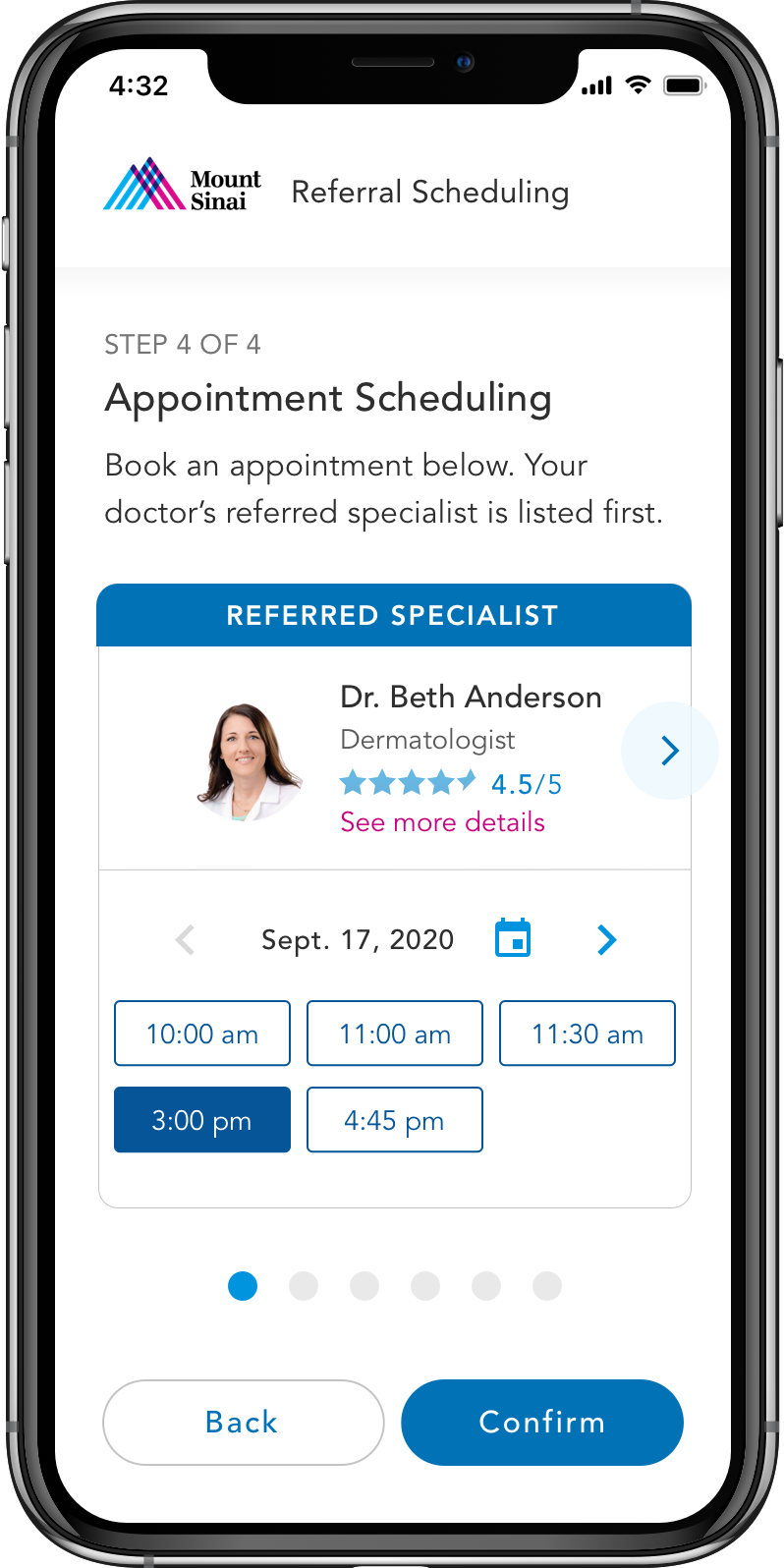
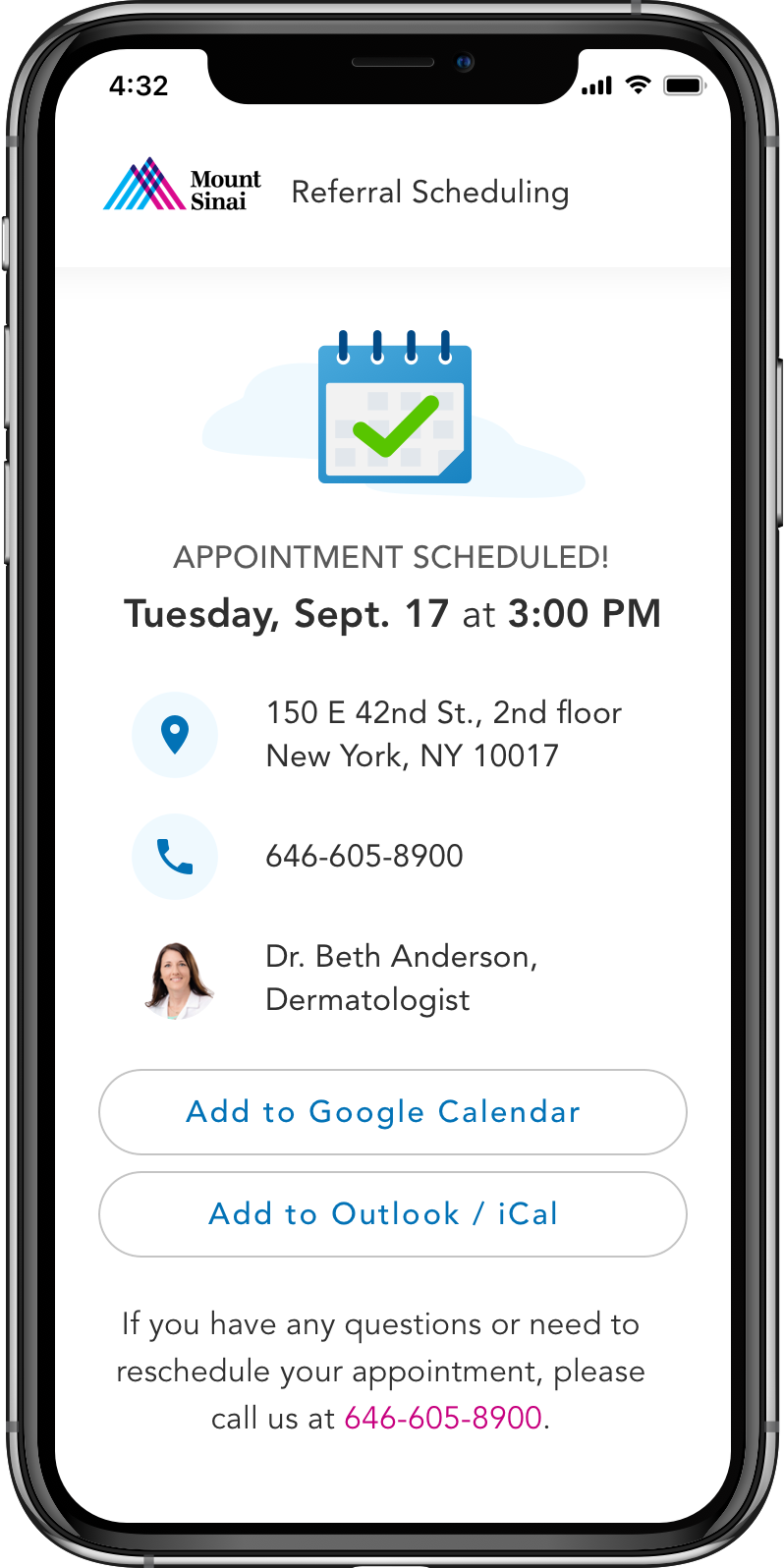
Building a B2C experience that enables OneMedical patients to access specialty care — a previously difficult, manual process — from anywhere, anytime.
30%→100%
Patient outreach rate for issued referrals
+20pts
Conversion rate increase (32% → 52%)
60→82%
Average consumer satisfaction score
The Problem
Easy access to referral scheduling is a significant driver of a health system's revenue growth, yet it continues to be a painful experience for most people seeking care. According to a 2018 report by Par8o, less than 25% of referrals issued by doctors in the US result in scheduled appointments. Before our team's involvement, only 32% of all referrals from OneMedical were converting to scheduled specialty appointments.
From the scheduling coordinator's perspective, the process was over-burdened with a high volume of incoming referral requests (~100–160 daily) for a team of just 4 coordinators. Their workflow contained many redundant steps and considerable context switching that left it prone to errors.
"Patients with referrals leave the OneMedical office confused about next steps they need to take to schedule and/or reluctant to go through those steps because they are overly complicated and time-consuming."
Process
Over four weeks, I created and led our research plan — conducting in-depth interviews with OneMedical patients who had previously scheduled referrals with Mount Sinai, as well as with scheduling coordinators to validate assumptions, understand staff-side pain points, and uncover opportunities for improvement.
I drove our partnership with OneMedical's Sr. Member Experience Manager and Sr. Product Manager to plan logistics and collaboratively interview patients across multiple Manhattan-based practices.
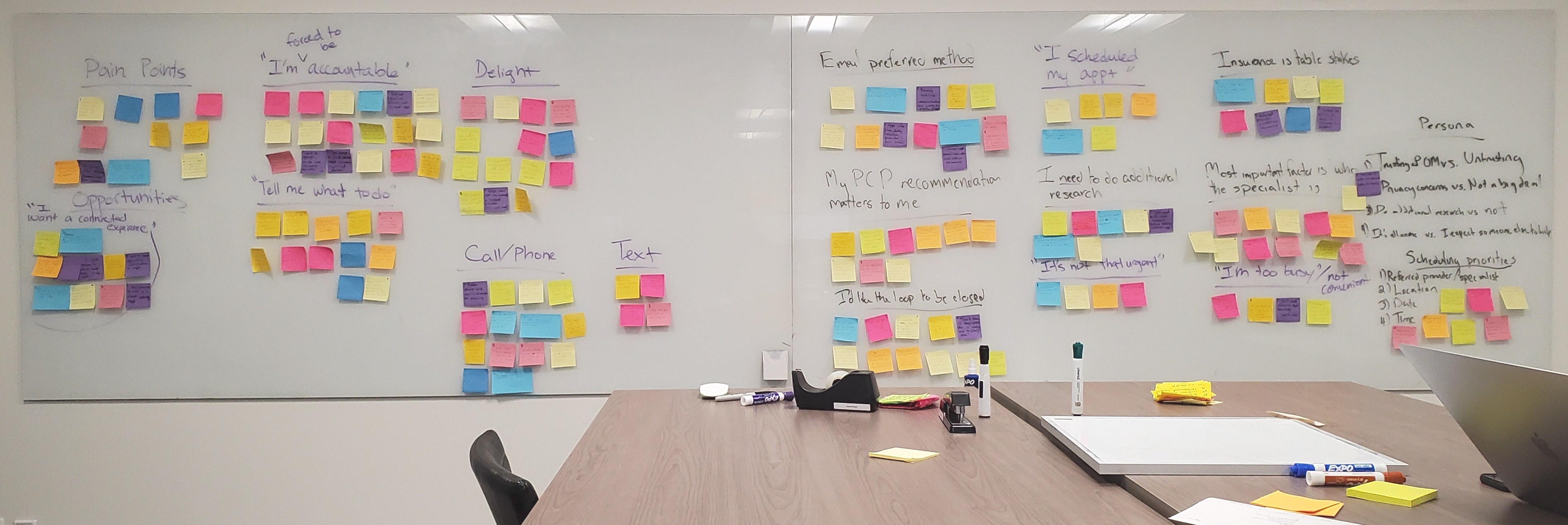
Affinity mapping OneMedical patient pain points
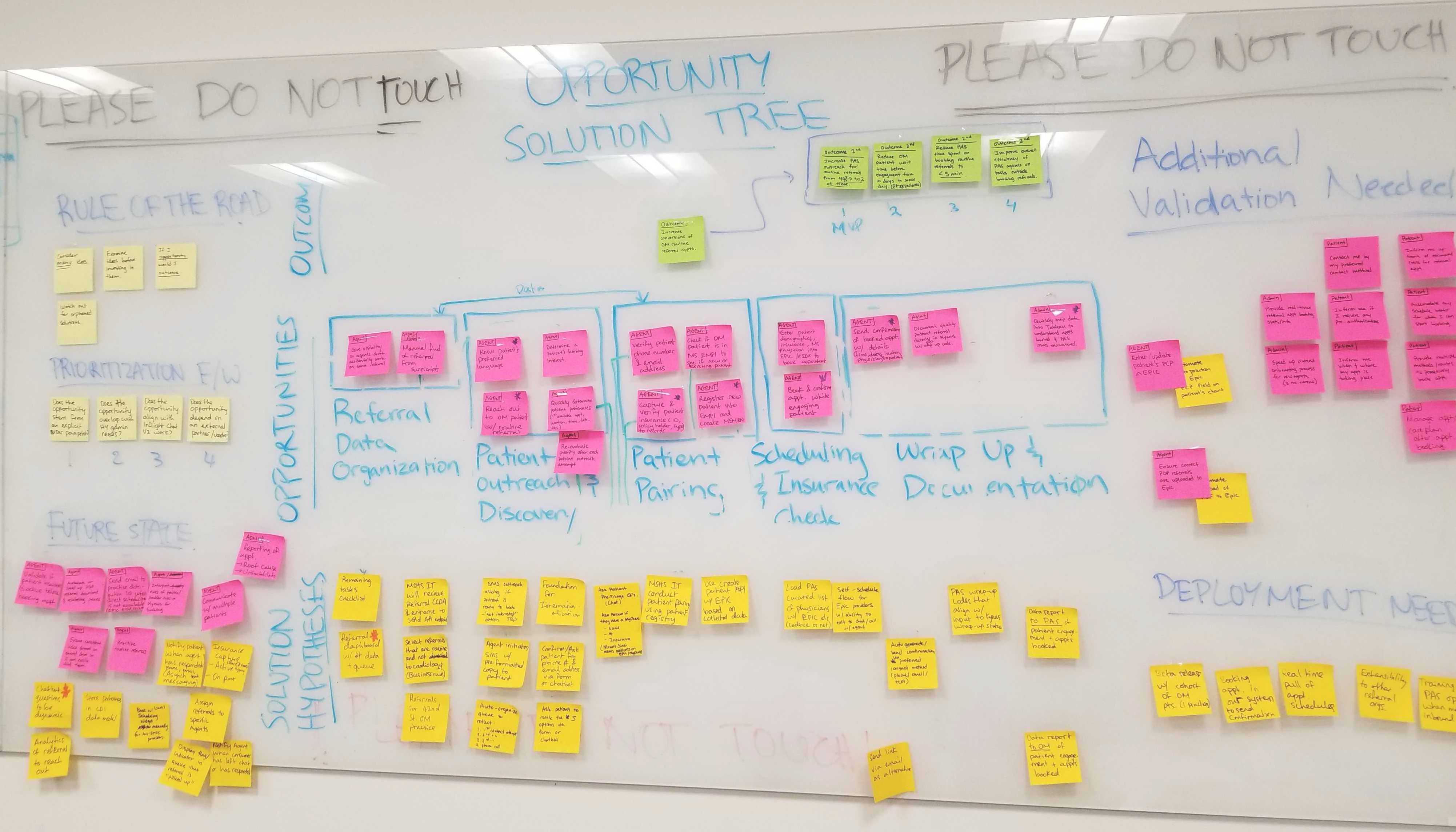
Opportunity solution tree from coordinator interviews
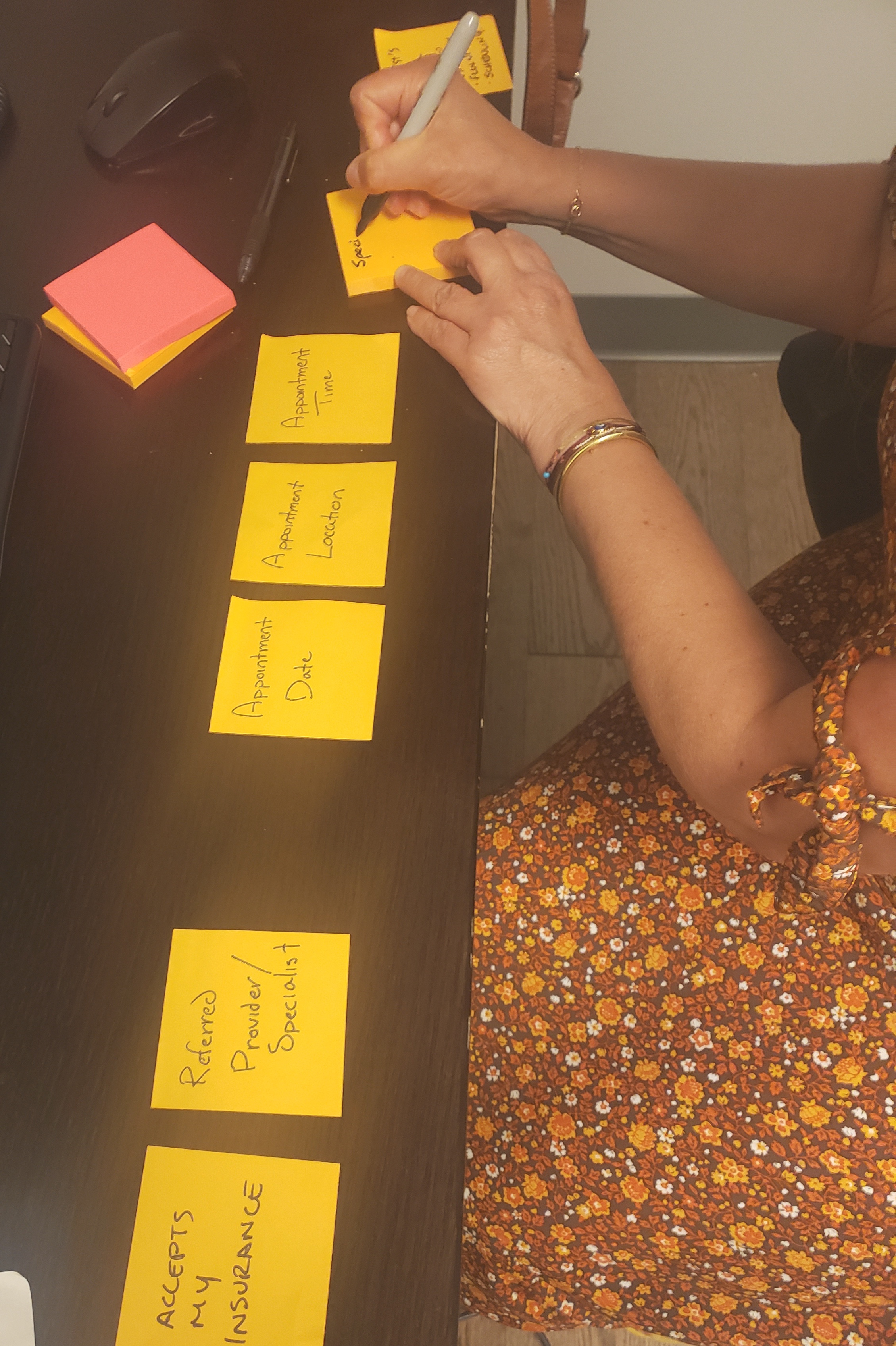
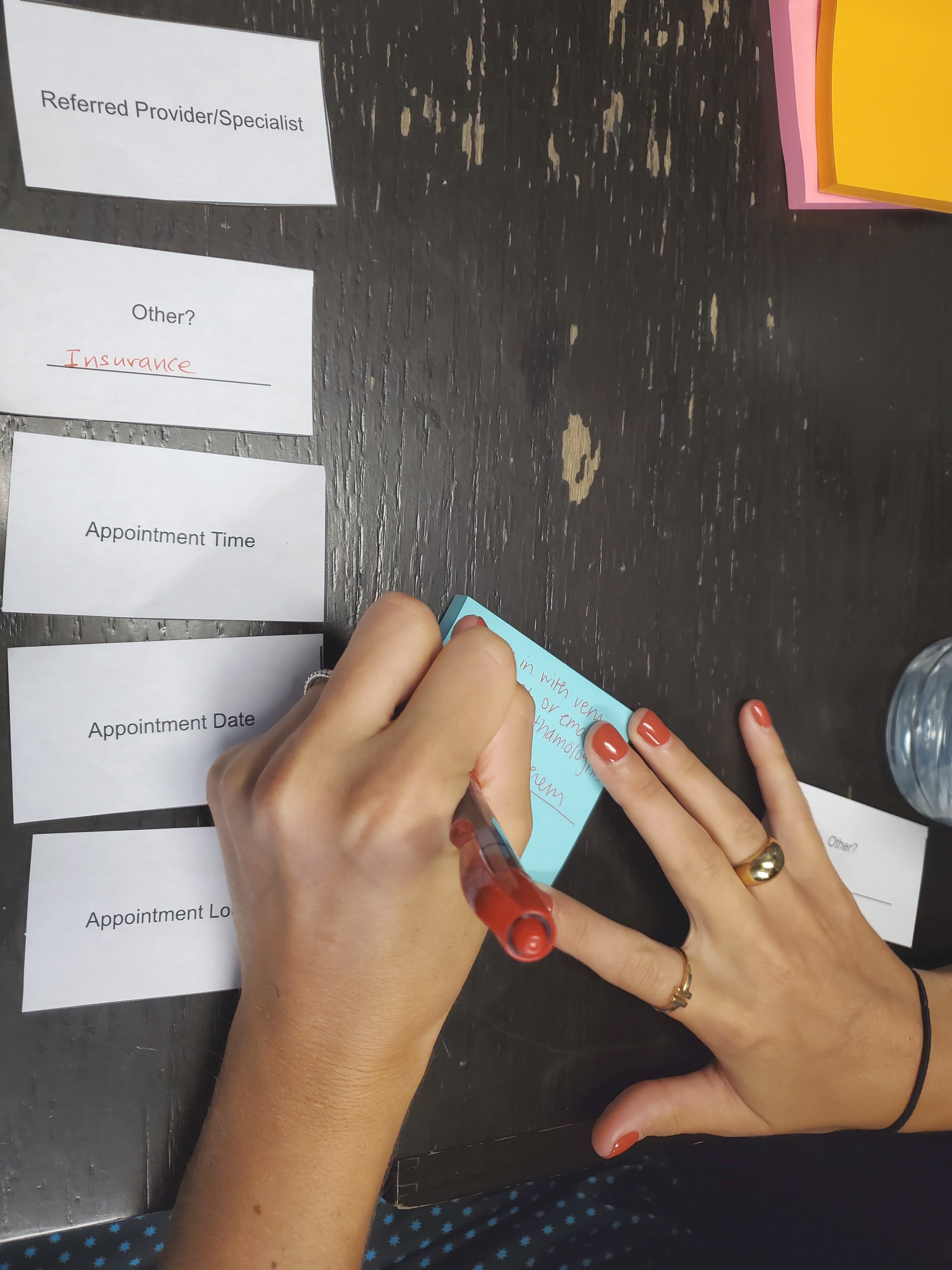
A storyboarding exercise performed by OneMedical patients to stack-rank their pain points — giving us a prioritized view of where friction was highest in their journey.
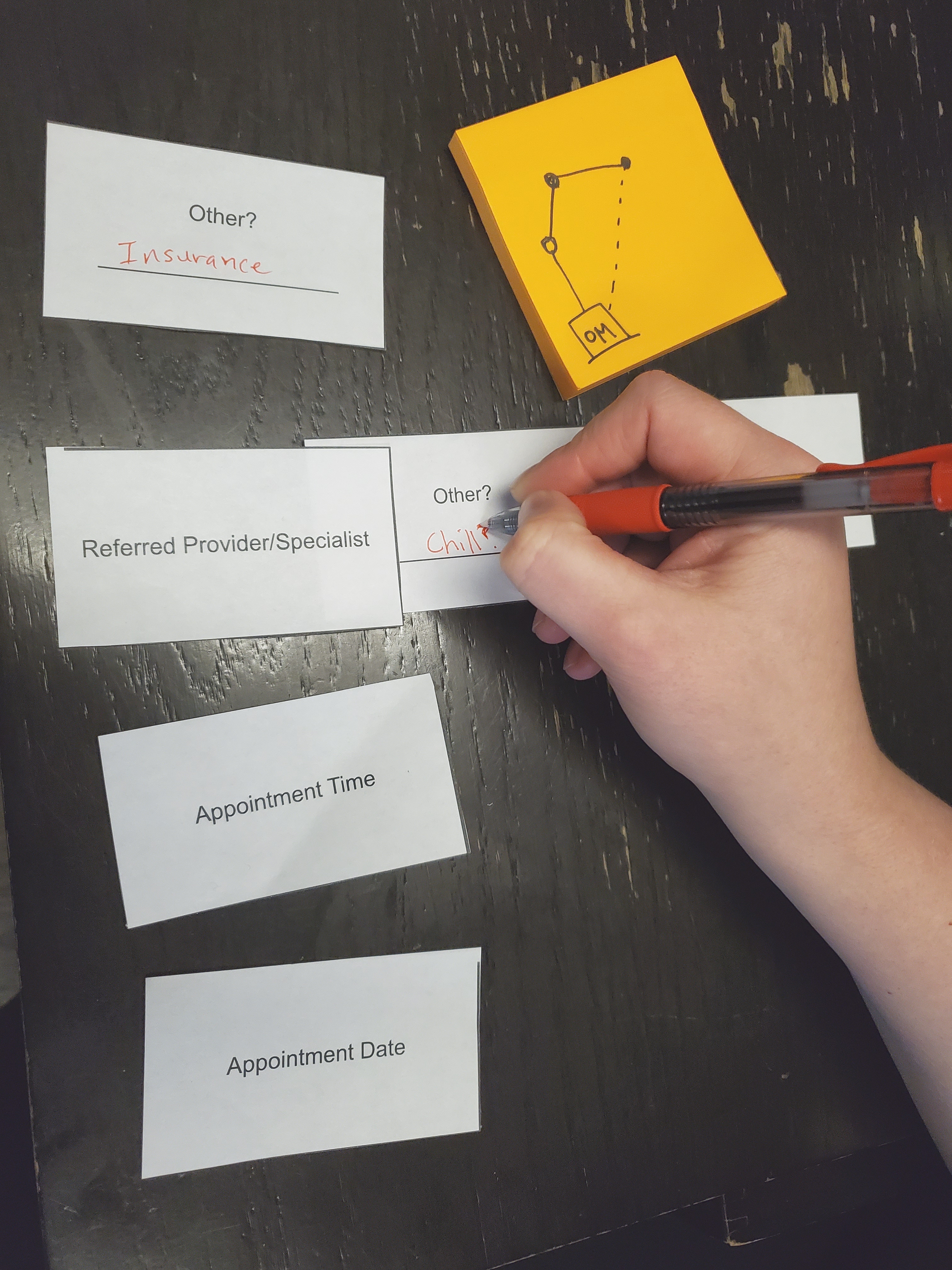
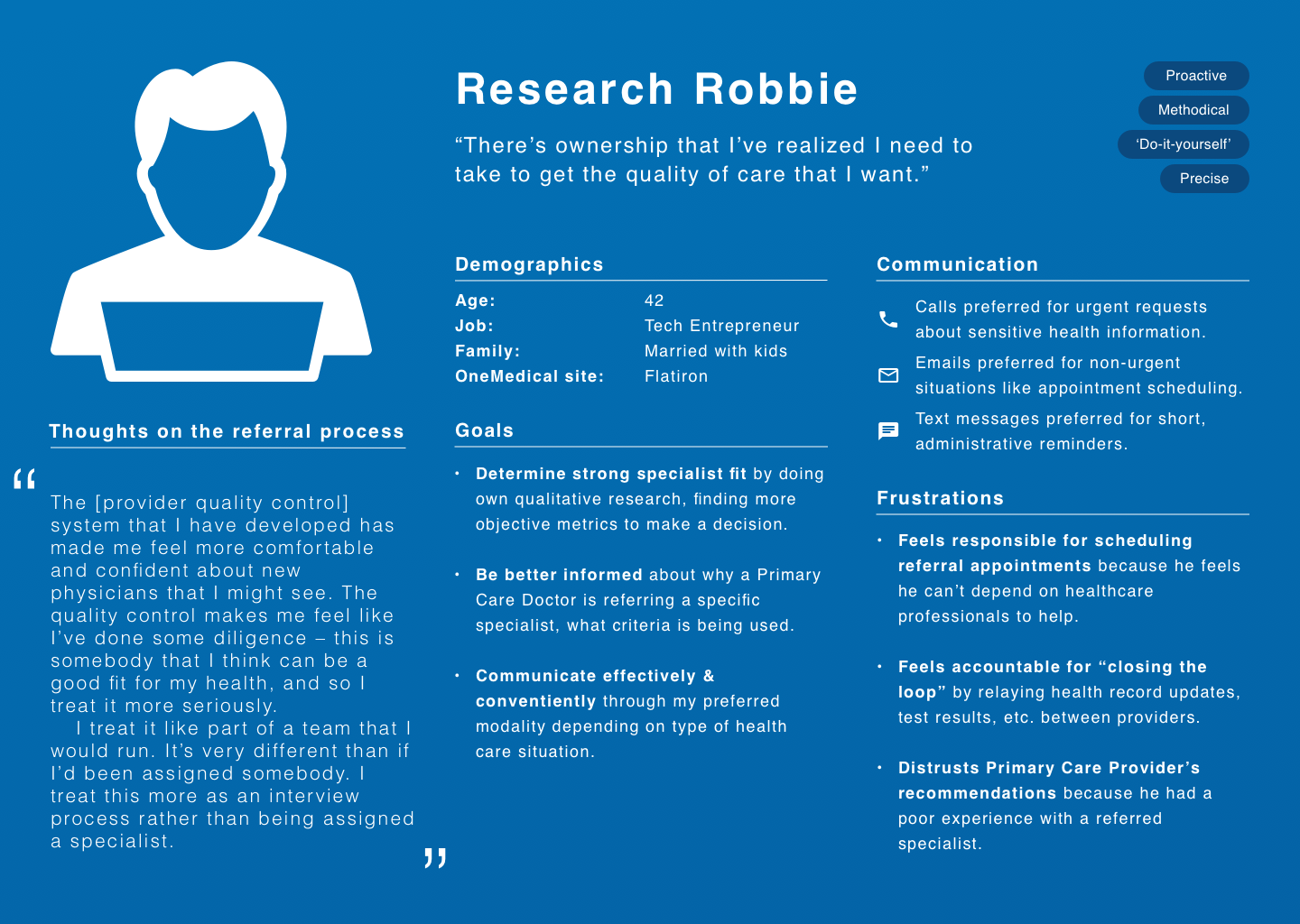
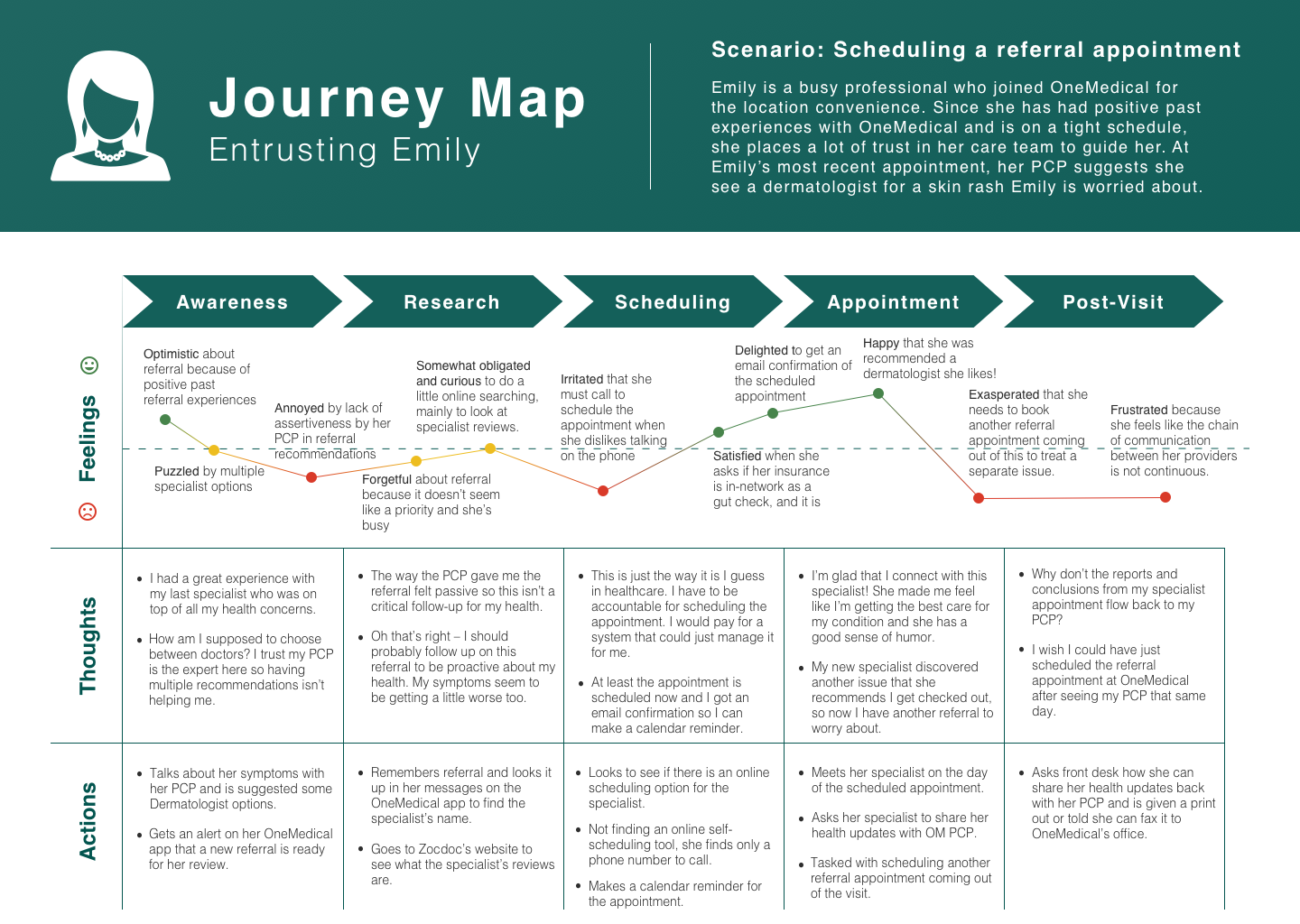
Research synthesis yielded two primary personas representing the two sides of the referral experience — the patient and the scheduling coordinator.
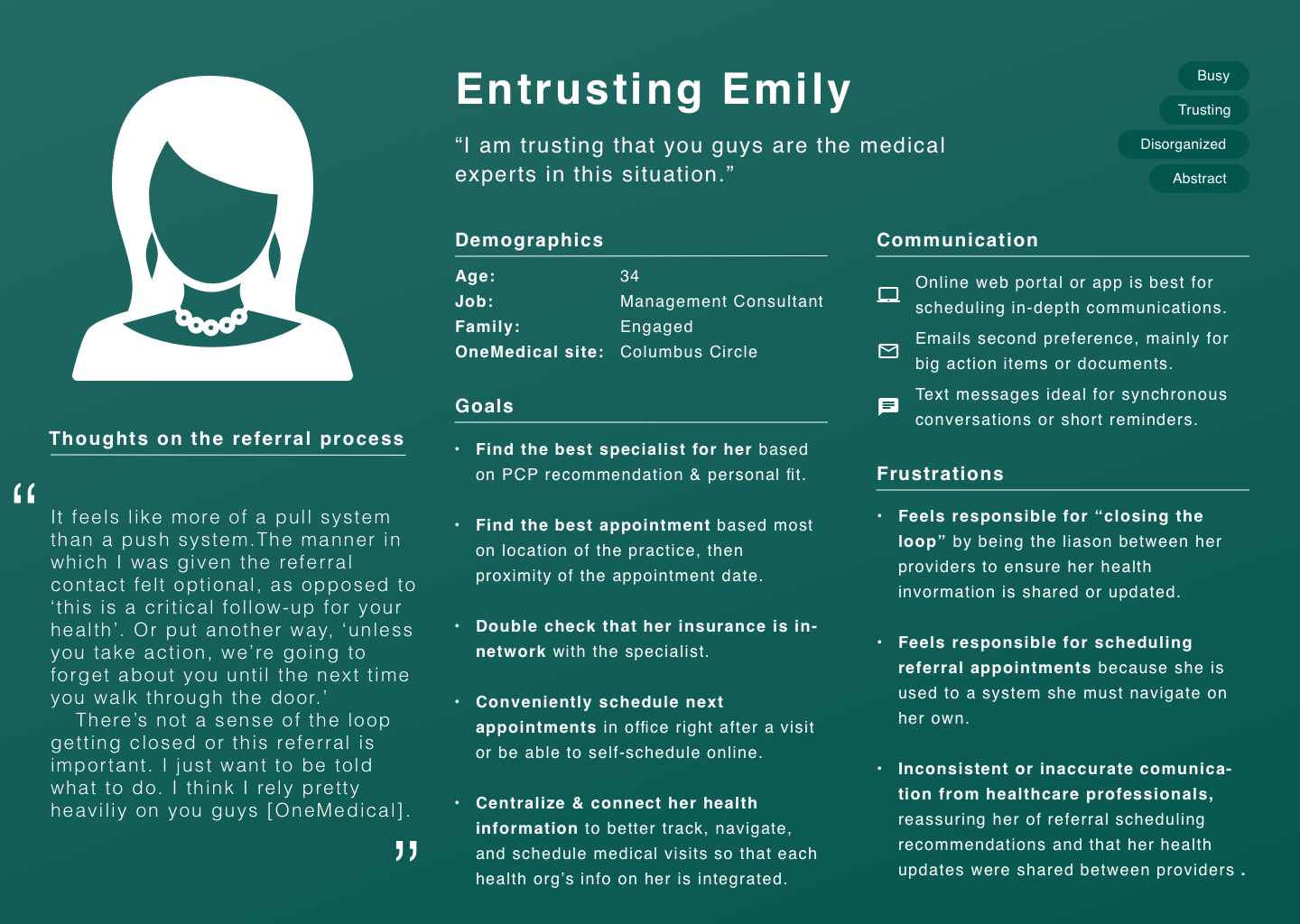
Entrusting Emily — patient journey map
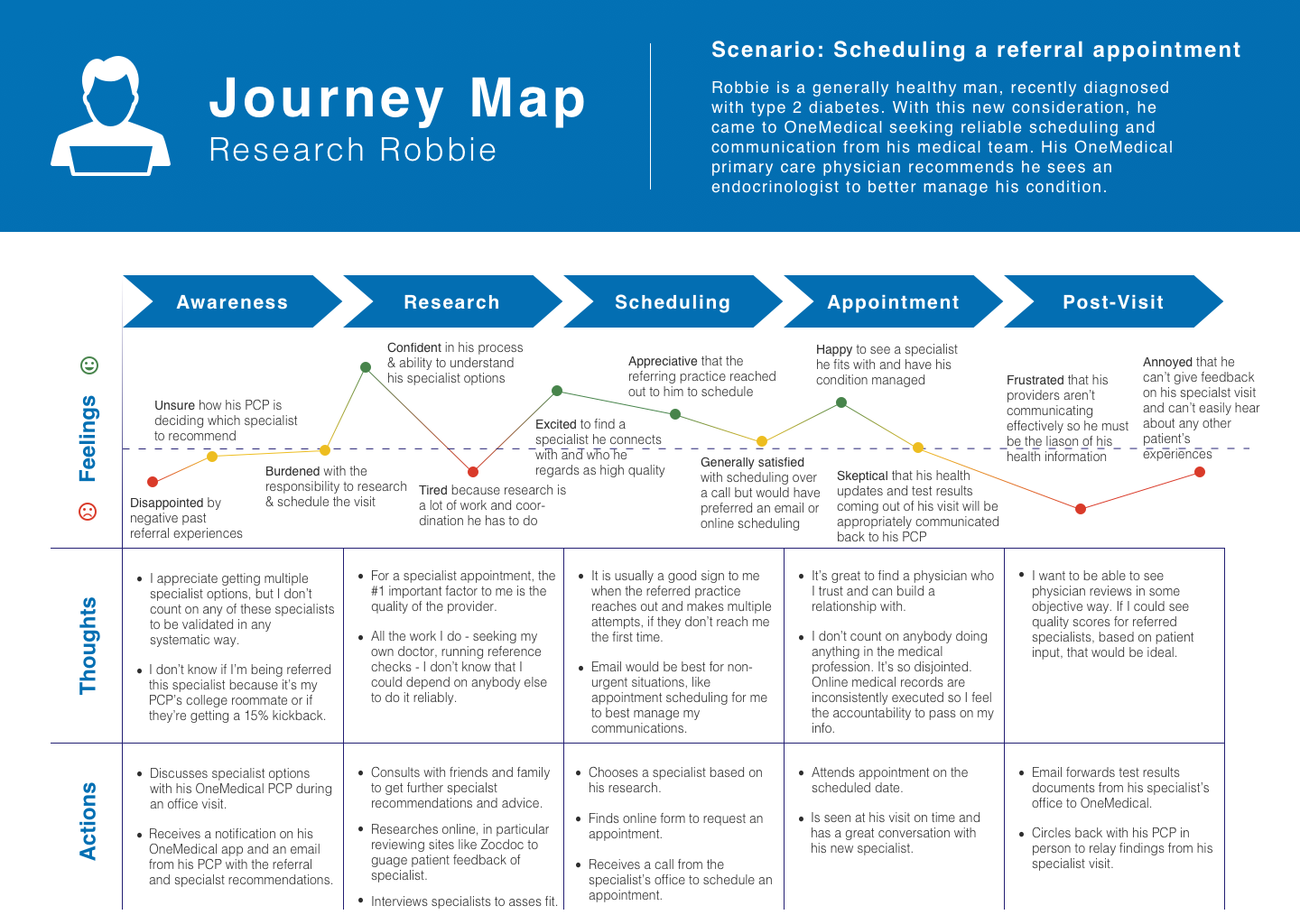
Research Robbie — coordinator journey map
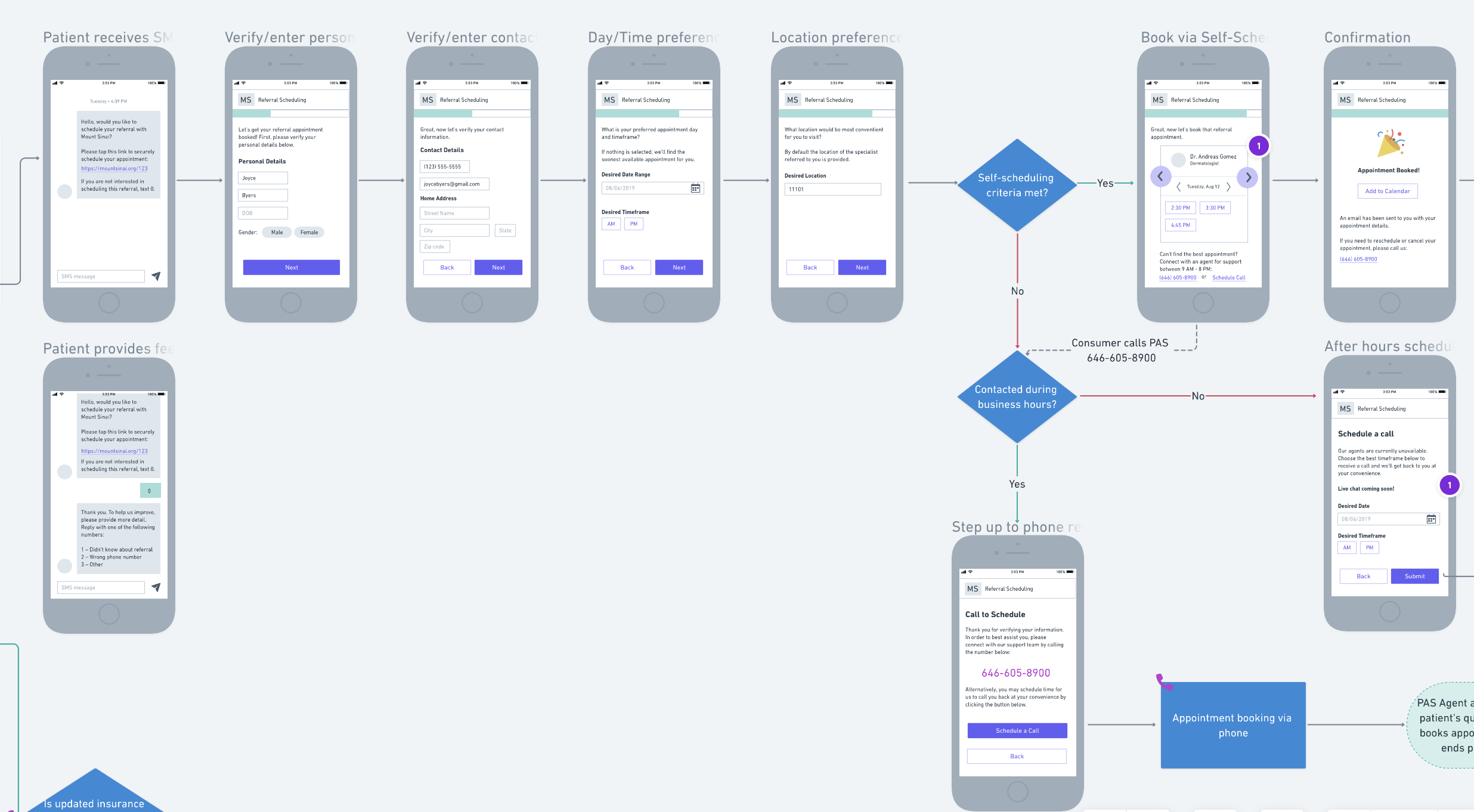
Moving out of divergence, I started to converge ideas derived from research themes in the solution space — working with my Product Manager partner to hone in on key areas of improvement. Visual workflow maps were instrumental in aligning both patient and coordinator experiences.
Low-fidelity wireflow of the OneMedical patient portion of the proposed solution
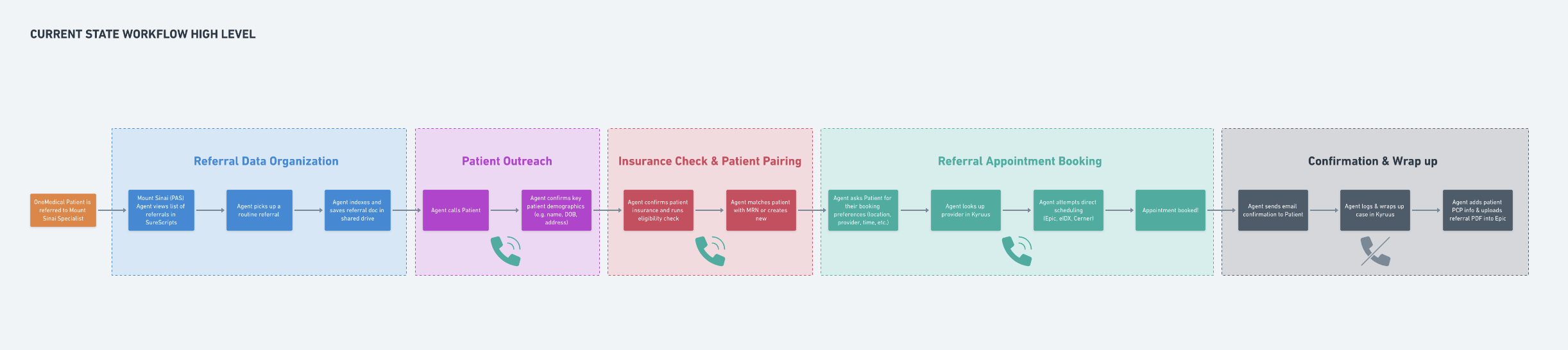
Scheduling coordinator workflow
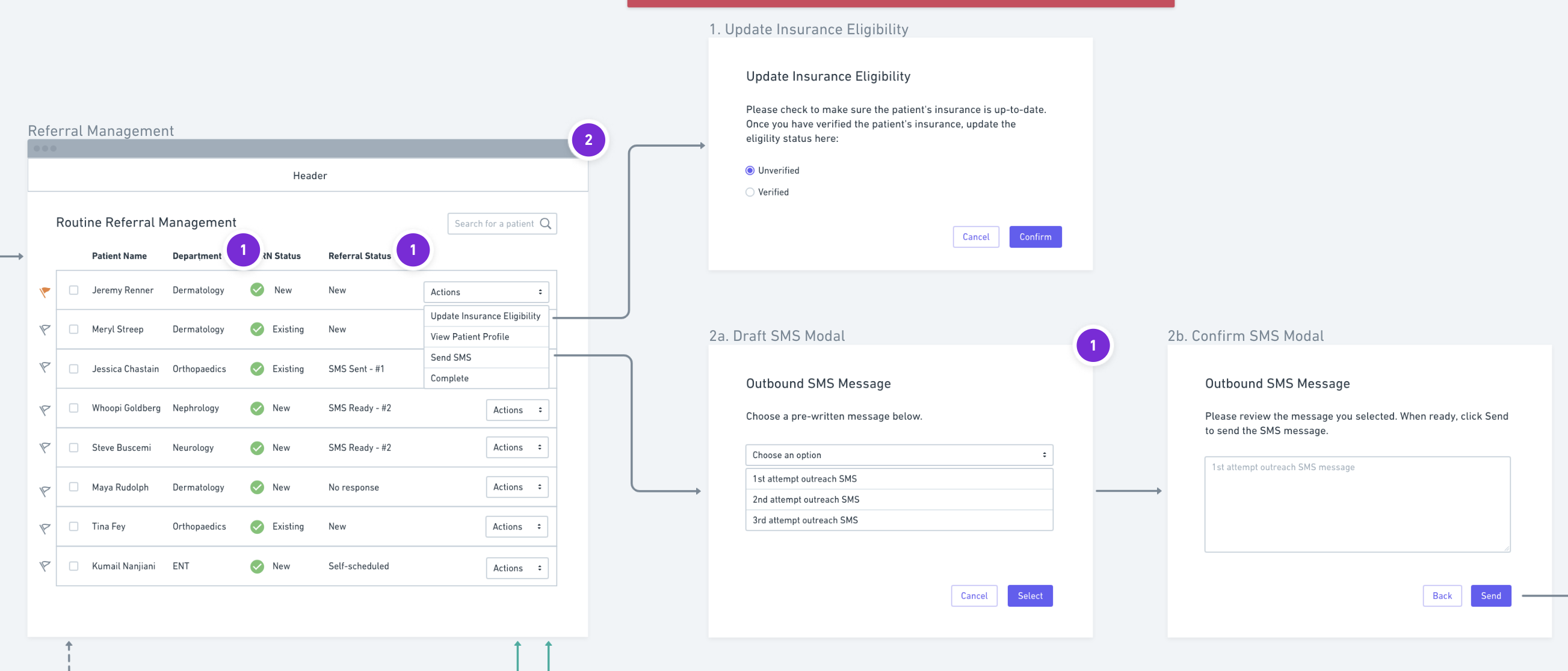
High-level coordinator workflow overview
Solution
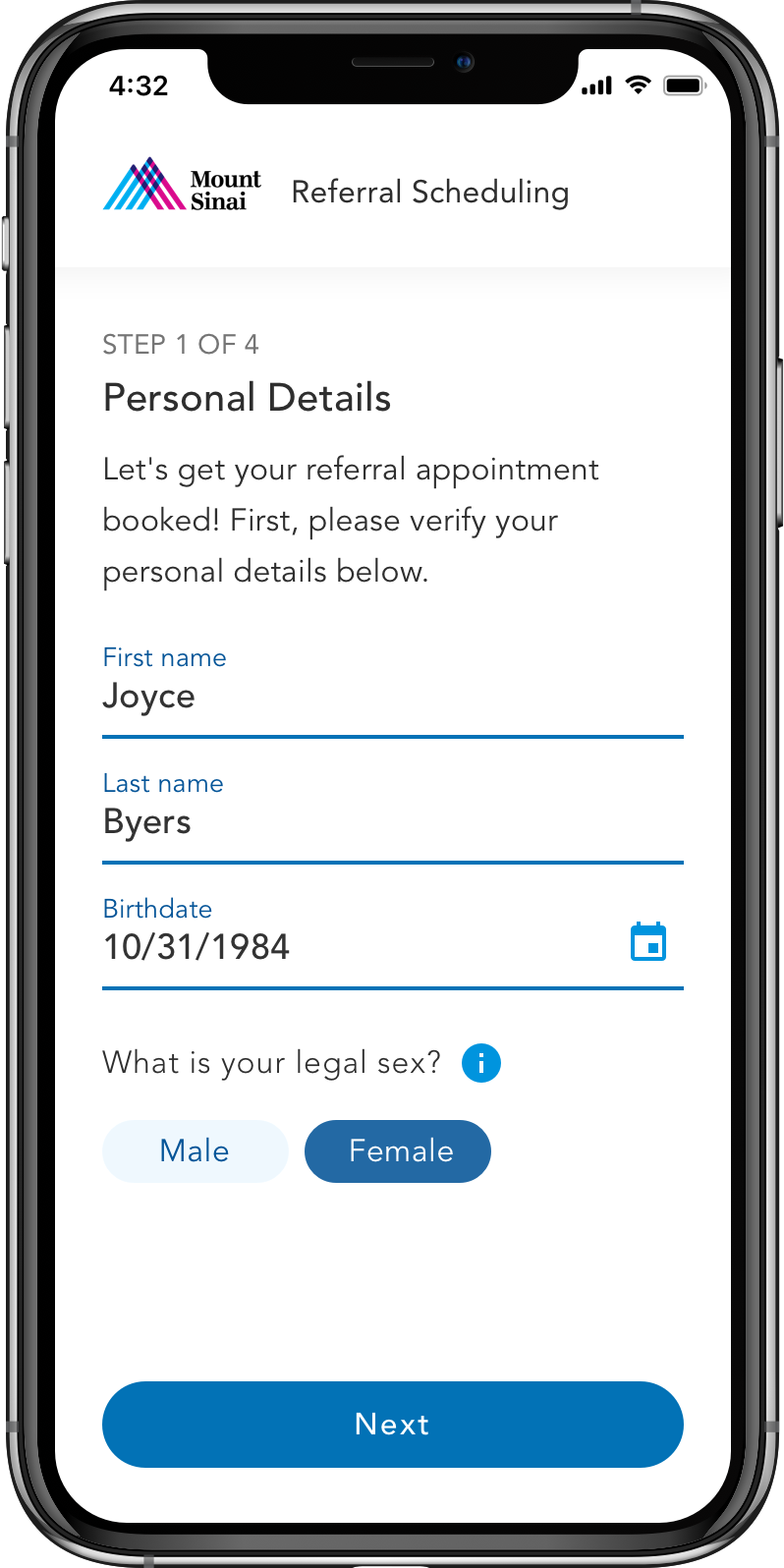
The final product is a digital scheduling experience that enables OneMedical patients to easily book visits with specialists — anytime, from any device — while simultaneously streamlining the scheduling coordinator workflow and reducing manual overhead.
Since 2019, this experience has enabled OneMedical patients easy, anytime scheduling access and significantly reduced manual overhead for Mount Sinai staff.